
Skinheads in the UK – The skinhead movement in the United Kingdom is often misunderstood, reduced to stereotypes that overlook its complex social and cultural roots. Emerging in the late 1960s, skinheads were not originally defined by politics or extremism but by working-class identity, music, fashion, and youth culture. Over time, splinter groups and media portrayals reshaped public perception, sometimes inaccurately. This article explains the real history of skinheads in the UK, tracing how the movement began, how it changed, and why its identity became contested. By examining British social conditions, cultural influences, and later political shifts, readers can better understand the full story behind this subculture.
Skinhead origins and working-class roots in the United Kingdom
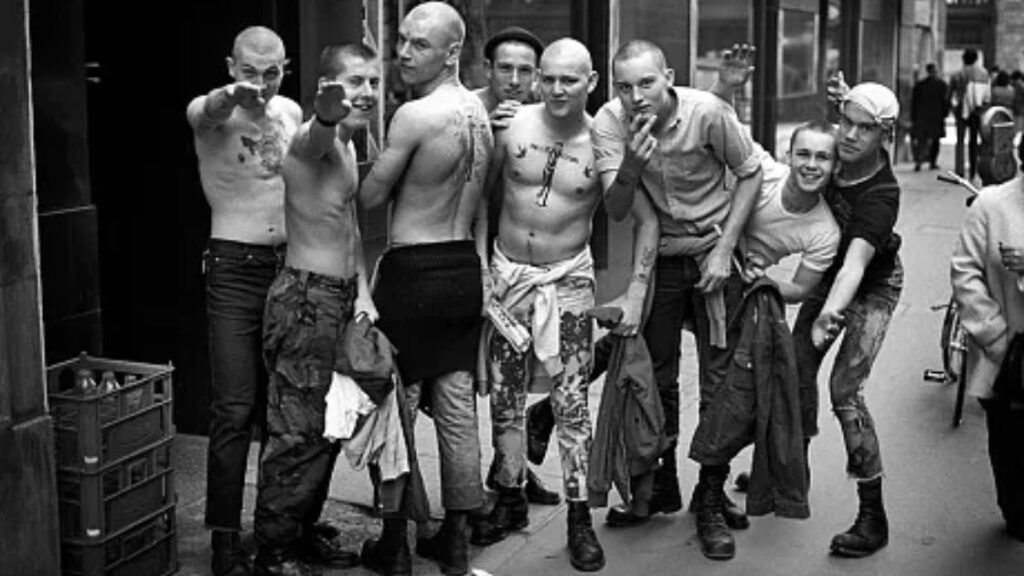
The skinhead movement began in the United Kingdom during the late 1960s, shaped largely by working-class youth in London and other industrial cities. British skinheads drew inspiration from earlier “mod” culture, Jamaican rude boy fashion, and ska and rocksteady music brought by Caribbean migrants. Short haircuts, sturdy boots, and practical clothing reflected pride in manual labour rather than rebellion for its own sake. In Britain at the time, social class strongly influenced identity, and skinheads expressed solidarity with dockworkers, factory workers, and apprentices. Early UK skinheads were multiracial, regularly attending clubs where Black and white youths shared music and style, challenging later assumptions about the movement’s original values.
British skinhead culture, music, and shifting identity across Britain
As the movement spread across Britain in the 1970s, skinhead identity began to shift. Economic decline, rising unemployment, and social tension affected many young people across England and Wales. Music evolved from ska into reggae, punk, and later Oi!, giving British skinheads a louder, more aggressive sound. While many remained focused on music and community, fringe groups started aligning skinhead imagery with nationalist or racist politics. Media coverage in the UK often failed to distinguish between these factions, portraying all skinheads as violent extremists. This period marked a turning point, where public perception increasingly diverged from the movement’s earlier cultural and musical foundations.
| Era | Main Influences | Identity Focus |
|---|---|---|
| Late 1960s | Ska, rude boy style | Working-class unity |
| Early 1970s | Reggae, soul | Youth subculture |
| Late 1970s | Punk, Oi! music | Rebellion and identity |
| 1980s onward | Political influences | Fragmented groups |
Modern interpretations of skinheads among UK communities
In modern UK society, the term “skinhead” covers a wide range of identities, from traditionalist groups preserving the original multicultural ethos to politicised factions rejected by mainstream Britain. Many contemporary British skinheads actively distance themselves from racism, emphasising roots in music, fashion, and working-class pride. Others exist largely as historical references rather than active movements. Across the United Kingdom, academics and cultural historians now stress the importance of separating the original skinhead culture from later extremist appropriations. Understanding these distinctions helps clarify why the skinhead label remains controversial while also highlighting its legitimate place in Britain’s post-war social history.
Media portrayal and public perception of skinheads in UK society
Media representation played a major role in shaping how people across the UK view skinheads today. Sensational reporting in the 1970s and 1980s often focused on violence, football hooliganism, and far-right activism, reinforcing fear and misunderstanding among the British public. Films, tabloids, and television frequently ignored non-political skinheads who continued to engage with music scenes and local communities. As a result, the label became shorthand for extremism in the UK, despite historical inaccuracies. Recent documentaries and academic work aim to correct this narrative, encouraging a more balanced understanding of how subcultures can be misrepresented over time.
Frequently Asked Questions (FAQs)
1. Were skinheads in the UK originally racist?
No, early British skinheads were largely multicultural and influenced by Caribbean music and style.
2. Why are skinheads associated with extremism in Britain?
Later political groups adopted skinhead imagery, and media coverage blurred distinctions between different factions.
3. Do traditional skinheads still exist in the United Kingdom?
Yes, some groups continue to promote the original music- and culture-focused skinhead identity.
4. Is the skinhead movement still influential in UK culture today?
Its influence is mostly historical, shaping music, fashion, and discussions about class and youth identity.
